
The Importance of Thinking Clearly and Staying Well During Professional and Moral Distress
By Tricia McCarter
April 2026
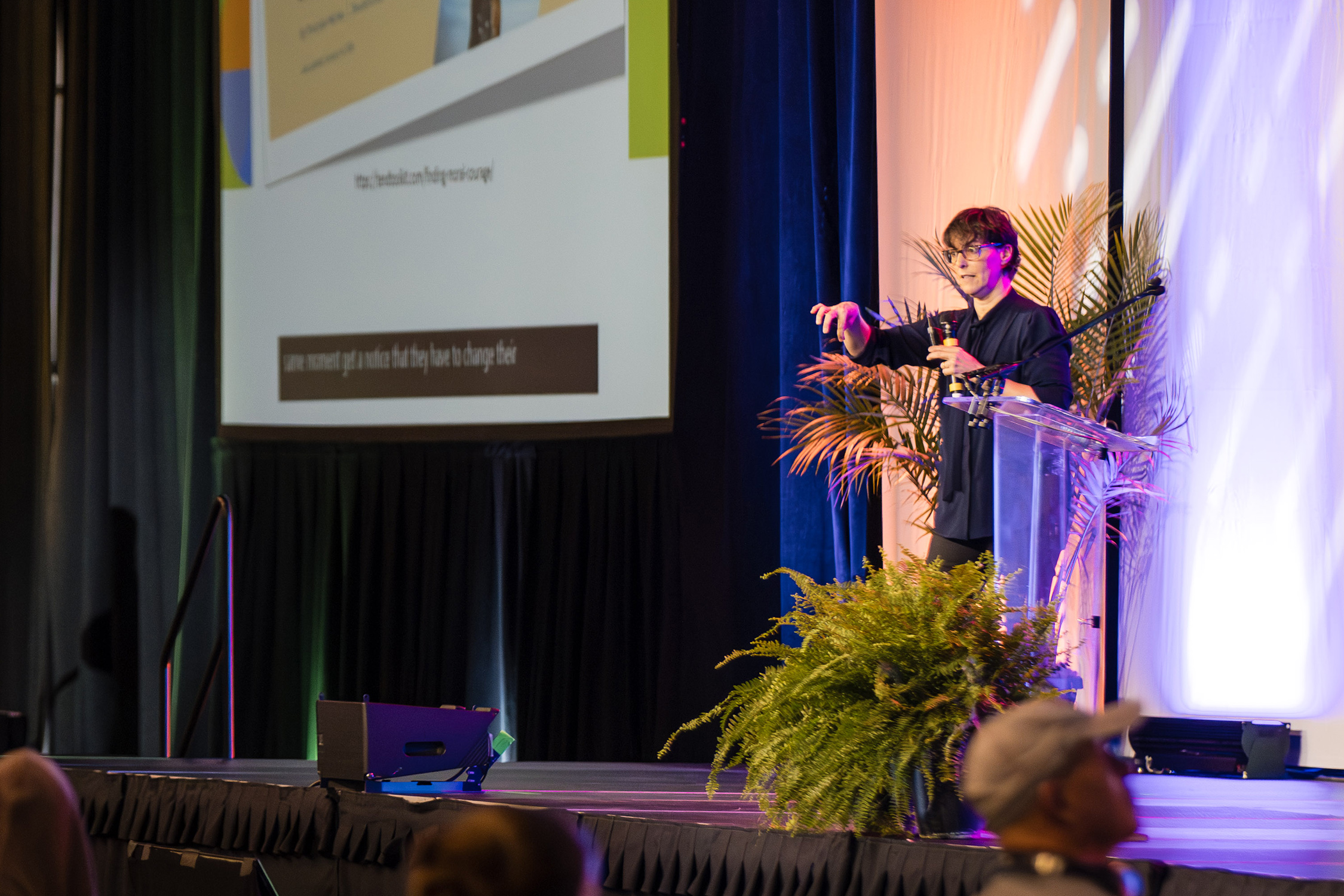
On the second day of the 2026 ACA Conference & Expo in Columbus, Ohio, educator, speaker and trauma-trained therapist Françoise Mathieu, MEd, RP, executive director of TEND, delivered a general session address about the importance of practicing moral courage while working with trauma and stress in professional settings. Mathieu shared relatable stories on encountering professional barriers that lead to moral dilemmas and seem insurmountable and using strategies that reinforce moral courage.
Managing Moral Distress with Moral Courage
Moral distress is “when rules, regulations, laws and procedures conflict with what you believe is ethical and right,” Mathieu said. She explained that moral courage is “standing up for values and principles when there's something to lose” and entails “the bridge between talking ethics and doing ethics.”
She outlined five qualities of moral courage:
- Integrity
- Honor
- Responsibility
- Decency
- Compassion
Addressing Ethical Challenges in Professional Settings
Mathieu highlighted the role of power, privilege and identity in professional situations and encouraged seeking supervision or peer support to clarify ethical boundaries. She emphasized that dealing with workplace and moral distress requires addressing ethical conflicts appropriately and identified six strategies for practicing moral courage in individuals and teams:
- Name the distress by identifying “what feels off or misaligned with our values.”
- Engage in quiet courage by “looking for one small, valuable mindset that's still within your role and your roots.”
- Strengthen solidarity within the system by “finding allies and creating a moral community so that we can stay grounded and not get completely discouraged.”
- Use formal ethical channels strategically.
- Invest in values-based clarity that reinforces the question: “What is your non-negotiable?”
- Support changes from within.
Resetting Through Pause
Mathieu cautioned against shutting down during very stressful times because “shutdown responses” prevent people not only from recognizing their physical reactions to challenging situations but also from making sound decisions.
“We all know that when we are scared, when we are feeling threatened, we cannot think clearly, and we also cannot have generosity towards other people,” Mathieu said. “I started the feeling that I needed to have curiosity … [because] it gives me a moment to pause.”
Mathieu emphasized that “when someone is in crisis, everything looks universally urgent,” but “we don’t all cope in the same way.” Ultimately, using social support is our "number-one protective factor.”
Search CT Articles
Current Issue
Sign Up for Updates
Keep up to date on the latest in counseling practice. Sign up to receive email updates from Counseling Today.

2461 Eisenhower Avenue, Suite 300, Alexandria, Va. 22314 | 800-347-6647 | (fax) 800-473-2329
My ACA Join Now Contact Us Privacy Policy Terms of Use © All Rights Reserved.