
Balance Through Boundaries
September 2026
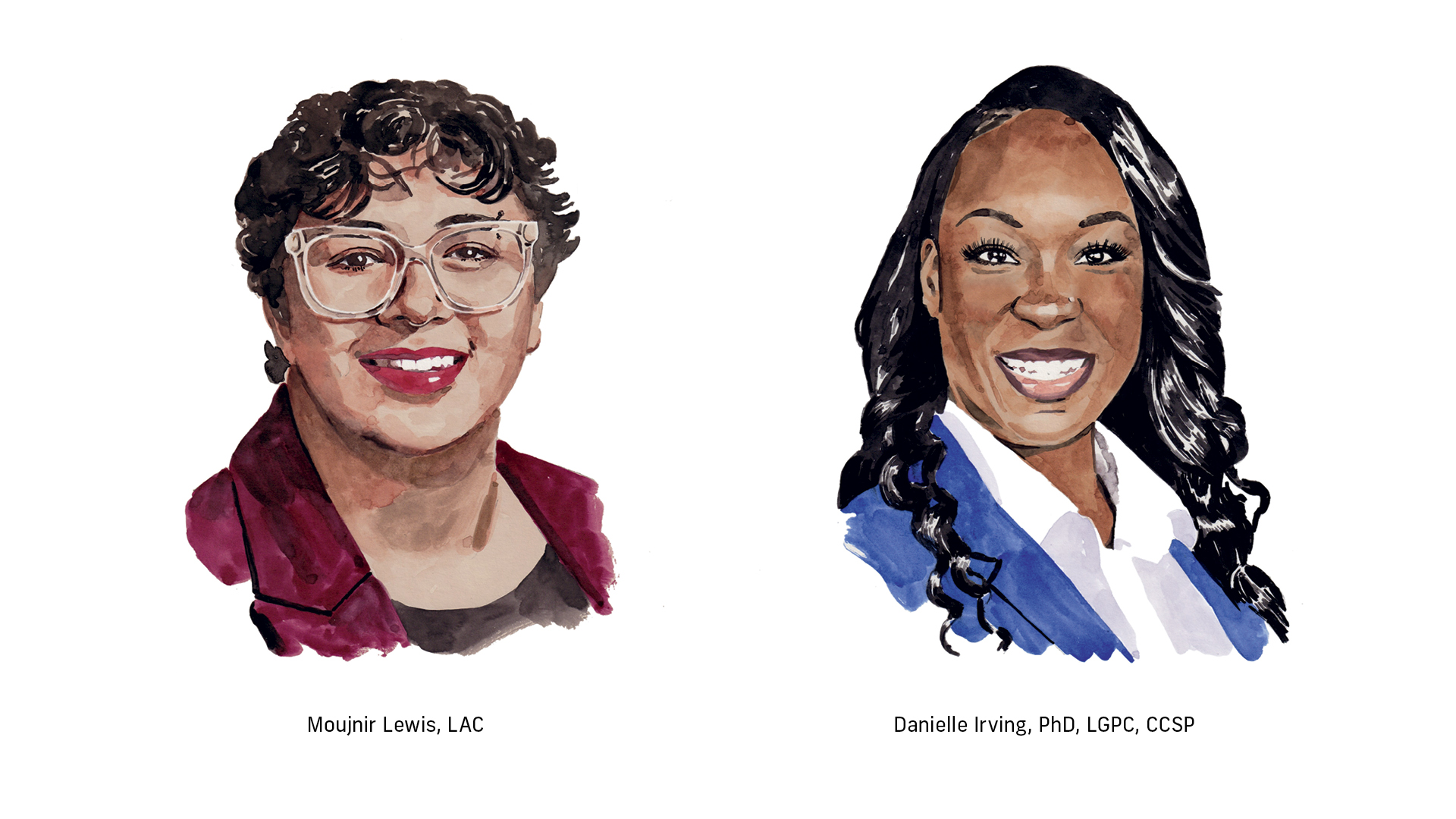
Every issue we ask a counseling student or new professional to pose a career-related question to another counseling professional who has experience in that topic. This month, Moujnir Lewis, LAC, asks Danielle Irving, PhD, LGPC, CCSP, how to balance the demands of the counseling profession.
Question:
It can often be difficult to balance the demands of establishing oneself as a counseling professional with one’s actual capacity for tasks. For example, someone might feel the need to say “yes” to every opportunity due to workplace expectations. What are some ways emerging licensed counselors can implement healthy professional boundaries when starting in the field?
Answer:
Incorporating healthy boundaries is not a barrier to helping others; it is an essential tool that allows us to remain effective, ethical and fully present throughout our careers. One of the most valuable lessons I learned early in my professional journey was the importance of establishing boundaries and communicating them clearly from the start. Doing so not only helps prevent burnout but also promotes long-term professional satisfaction, personal well-being and sustainable self-care practices.
Counselors are often drawn to helping others and may feel compelled to say “yes” whenever support is needed. However, healthy boundaries enable us to provide the highest quality care while considering our own limits and responsibilities. One practical strategy is to develop and practice boundary-setting language before you need it. Having statements such as the following readily available can make difficult conversations feel less intimidating:
- “I’d like to help, but I need to review my current commitments first.”
- “I don’t currently have the bandwidth, but here is how I can contribute in the meantime.”
- “I am unavailable after business hours, but here is the process for emergencies.”
Familiarize yourself with company policies regarding communication, and establish clear expectations for response times, availability and emergency procedures. Define your work hours by establishing a clear start and end time for your workday and communicate your availability to supervisors and colleagues. It’s tempting to work and respond to emails after hours, but doing so consistently may unintentionally communicate that you are always available. Always evaluate your workload and capacity before volunteering for additional projects or responsibilities.
Boundary setting also requires self-awareness. Take time to reflect on situations where you may struggle to say “no” or feel obligated to take on more than you can reasonably manage. Consider the circumstances that challenge your boundaries, and identify strategies for responding differently. Effective counselors recognize when to delegate, collaborate, supervise or consult rather than carrying every responsibility themselves.
One of the greatest challenges we face is separating our professional role from our personal identity. While counseling may be our passion, it is not our entire identity. Maintaining hobbies, nurturing personal relationships and pursuing interests outside of work are all essential components of a balanced, fulfilling life. Prioritize self-care, schedule regular breaks throughout the day, use vacation time, take mental health days when needed, and engage in activities that support physical, emotional and social well-being.
Finally, remember to advocate for yourself. No one understands your workload and needs better than you do. Become comfortable discussing expectations, productivity standards, performance metrics and workload concerns with supervisors. Use supervision not only for clinical growth but also to process boundary challenges, ethical dilemmas and workplace stressors.
Healthy boundaries do not diminish our ability to care for others — they strengthen it. By establishing boundaries early in your career, you are investing in your well-being, effectiveness and ability to serve others with compassion and integrity for years to come.


2461 Eisenhower Avenue, Suite 300, Alexandria, Va. 22314 | 800-347-6647 | (fax) 800-473-2329
My ACA Join Now Contact Us Privacy Policy Terms of Use © All Rights Reserved.