
Rural Rhythms
By Meredith Sell
January 2026
In the nine years that Amanda DeDiego, PhD, LPC, NCC, has lived in Casper, Wyoming, the associate professor of counseling at the University of Wyoming (UW) has seen the local posture toward mental health counseling start to change. Originally, she was “everybody’s dirtiest secret.” Her clients didn’t want their friends and neighbors to know they went to counseling. The shame around needing help was too strong. But, lately, she’s noticed a shift.
“People will say little things like, ‘Let me just let my boss know I’ve got therapy and I need to step out for a little bit,’ or my adolescent clients will say, ‘I was telling my friend about what you said the other day,’ and by expansion all their friends know they go to therapy,” she says.
The change might be generational. Mikal Crawford, EdD, a retired counselor educator living in Damariscotta, Maine, says, “Younger folks tend to be more open to receiving mental health counseling and services.” But a broader shift might be happening, influenced by the work of behavioral health professionals, such as efforts happening in Wyoming.
DeDiego was recruited by UW to help start a master’s in counseling program aimed at building the counseling workforce throughout the rural state. The hybrid program operates out of UW’s satellite campus in Casper, which is more centrally located and easier for more students to reach than the university’s main campus in Laramie. Over three years, students attend virtual classes, complete coursework from home, intern with private practices or mental health centers near where they live, and, three weekends each semester, travel to Casper for in-person intensive courses. The program is designed for nontraditional adult students who’ve decided to pursue a counseling career but can’t pick up and move to pursue a degree.
“We can target these rural communities with passionate individuals who have everything but the training,” DeDiego says, “and we can provide the training in a way that allows them to stay in those communities and be supported and be able to work themselves into a job right after graduation.”
The result: more licensed professional counselors in remote parts of the state.
The Rural Need
The UW program is one way institutions and professionals are seeking to meet the need for counselors in rural areas. Nationwide, 47% of Americans live in a mental health professional shortage area, according to KFF. And, two-thirds of mental health professional shortage areas are rural, according to the National Rural Health Association.
These shortages have a tangible impact on mental health outcomes. Despite comparable rates of mental illness, rural areas have higher suicide rates — between 18.3 and 20.5 per 100,000 residents — than urban areas (10.9 to 12.5), according to Mental Health America. The most rural, least densely populated states tend to have the worst suicide rates, with Alaska, Montana and Wyoming at the top of the list, according to the Centers for Disease Control and Prevention. This phenomenon may be due in part to the lack of resources in those places, highlighting the need for counselors interested in working with rural populations.
“We made a conscious decision to live and work close to the natural environment with access to the mountains and the coast,” says Crawford, who moved to Maine with her husband in the middle of her career, after working in rural Maryland for 19 years. She faced similar challenges in both locations. “When you’re in a small town and you’re pretty far away from a large city with more resources, you have to be very much a generalist in the work you do,” she says. “You’re going to see all different kinds of issues coming across your doorstep. You need to carefully stretch your scope of practice at times, while remaining cognizant of your ethical responsibilities.”
When Crawford worked in Maryland public schools as a school counselor, one of her school kids was struggling with reading problems, but the school didn’t have the resources to test him for dyslexia. She ended up driving him and his mother to Baltimore at her own expense on a Saturday so he could be tested. The results helped the school provide appropriate services to the child the rest of the school year.
Later, when Crawford worked in a university counseling center as a clinician, she was called to one of her clients’ homes, where the student was in crisis and wouldn’t leave her room. In a more urban setting, Crawford wouldn’t have gone to the client’s home, but “you do things in a rural area that you likely wouldn’t do in other places,” she says.
Out of the Box
Rural counselors have to be creative about meeting their clients’ needs. While in a city, there may be a special mental health response team dispatched for emergencies and specialists on everything from eating disorders to schizophrenia within 10 miles. But in rural areas, a counselor may be the only behavioral health professional in their town or county. Their ethical obligation to do no harm means they must do their best to find solutions for clients, even without nearby specialists or other resources.
When DeDiego moved to Wyoming from Atlanta, she was surprised to learn not every community had a hospital. “In crisis situations, we’re always taught that if things escalate, you need to call 911 and they need to go to the hospital,” she says. But in many parts of Wyoming, emergency response can take 35 minutes or longer. This raises the stakes for counselors and puts the responsibility on them to make sure they know what resources are available and what they’ll do if there aren’t any medical facilities nearby.
Counselors also need to be flexible in how they work with clients and solve problems or mitigate risks. Katherine McVay, PhD, NCC, LPC, assistant professor at Texas A&M University-Corpus Christi, mentioned how, in a counseling session discussion of coping mechanisms, an elementary school student said he loved to lay next to his cows in the pasture. “I’m probably not going to be able to use that with anybody else,” she says. “The skills are going to work [in the country], but they’re also not necessarily going to translate everywhere else.”
Many of DeDiego’s clients who struggle with suicidality also keep guns in their homes and need them for hunting and ranching. “How do we keep you safe knowing that you live on a ranch and you need your firearms to do your job?” she says. She keeps a few trigger locks in her office that she offers to clients, recommending they put the key in an inconvenient place or give it to their hunting buddy. She directs her telehealth clients to pick up a trigger lock from their local law enforcement or health department office, which offer them free of charge. She asks if they could have a friend hold onto their ammunition. In one case, a client didn’t want to do either of those things, but he taped a picture of his dog to the gun safe to remind himself how much he loved his dog and needed to be around to take care of him.
New Opportunities
While in-person counseling remains the preference, nationwide pushes to expand broadband internet — as well as pandemic-time expansions of Medicaid coverage of telehealth and federal funding, like the American Rescue Plan Act — have made counseling available to more people in rural areas via telehealth. At least 20 states, including Wyoming, have used funds from the act to build up broadband infrastructure, and according to KFF, rural areas have seen higher use of telehealth than urban areas.
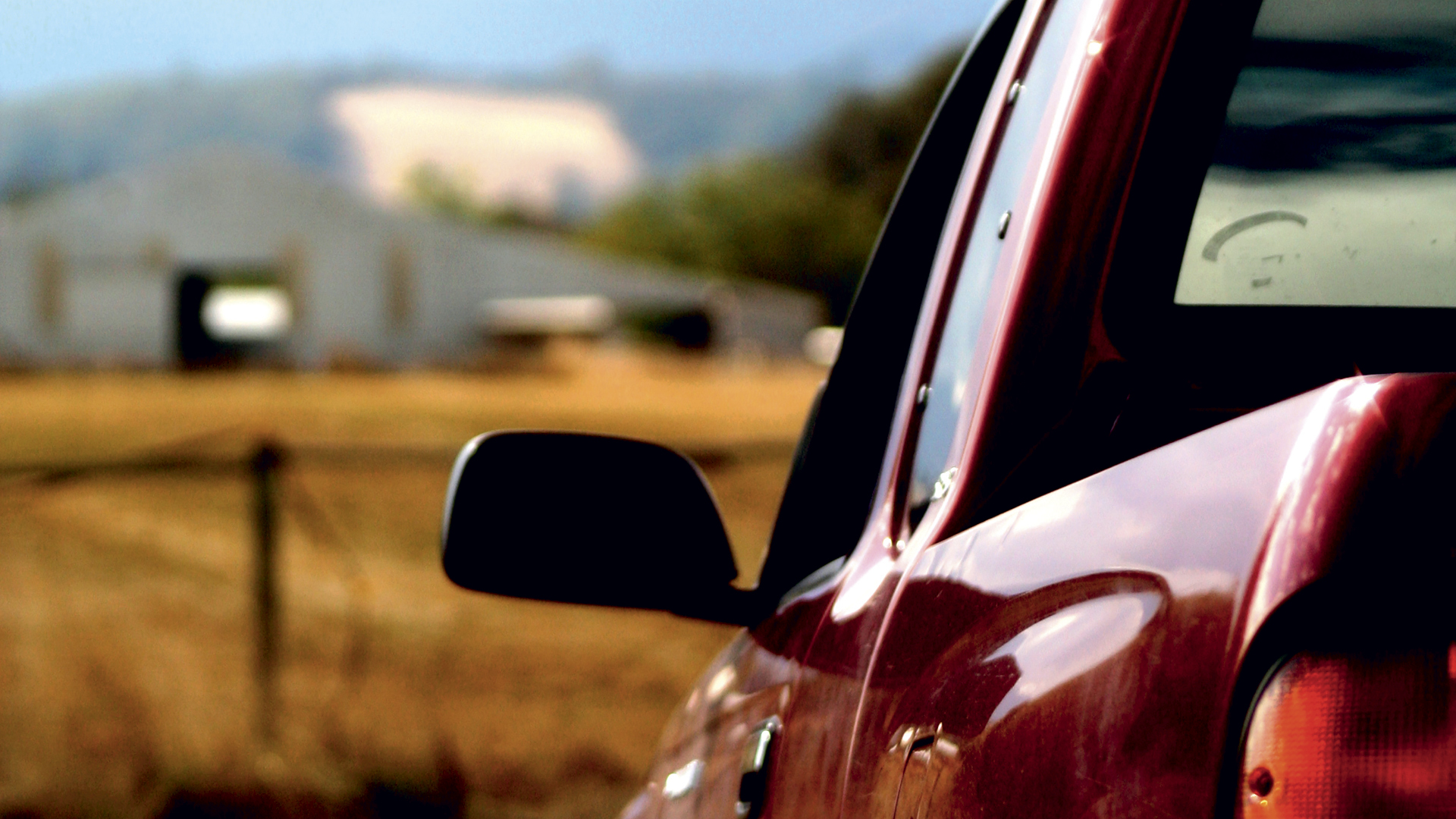
Telehealth eases some of rural America’s resource problems. If there isn’t a counselor in driving distance, a person with internet access and the right device can meet with one online. If the counselor in town is a good friend or a person doesn’t want everyone to notice their truck outside the counselor’s office, they can use telehealth to get the help they need. “A lot of time, people bypass the person in town and go to telehealth anyway for a lot of different reasons, one of them being they don’t want the person in town to know their business,” Crawford says.
In Wyoming, the Public Access Telehealth Spaces Initiative is piloting private telehealth spaces in three local libraries throughout the state, so people who don’t have internet or a device at home can still access telehealth services. DeDiego says the university agricultural extension offices are exploring a similar program, enabling farmers and ranchers to meet with their counselor at their local agricultural extension office.
“We’re evolving a bit to find neutral spaces,” she says. “I could have a group in my office. I could also have the group at the community center or in the library … in these neutral spaces where people are already mentally associating them with resources.” This community presence may be part of why she’s seeing a shift in the stigma around counseling.
The challenges of counseling in low-resourced rural areas aren’t disappearing, but they present opportunities to find solutions that can improve access and care for entire communities. Sometimes, the solution is leaving the office and stepping into a third space. Sometimes, the solution is saying yes to a client even though they have a complex diagnosis that other providers are wary about.
This happened recently with DeDiego. A client with dissociative identity disorder (DID) came to her after being turned away by multiple others. DeDiego hadn’t worked with a person with DID before, but she knew she could dive into the literature, consult with experts from elsewhere in the country and figure out how to help. At the end of their first appointment, the client asked, “Does that mean you’re going to take me as a client?” DeDiego said, yes, if they wanted to come back. The client burst into tears.
“I can always put more tools in my toolbox,” DeDiego says. That mindset helps rural counselors meet the challenges where they are.
Keys to Success in Rural Counseling
Katherine McVay, PhD, NCC, LPC, assistant professor at Texas A&M University-Corpus Christi, is one of the authors of ACA’s Rural Counseling Competencies continuing education texts. She shares what counselors in rural settings need to consider:
Knowledge: Understand the community you’re in, its unique identity, history, values and family patterns. What resources does it have? What resources does it lack? How does poverty shape the community?
Skills: Navigate dual relationships with clients and the ethical issues that arise. Are you comfortable counseling your mechanic or your child’s teacher? How will you address conflict that arises? What are the risks of turning them down as a client if the next counselor is two hours away?
Attitudes and Beliefs: Acknowledge the rural belief in self-sufficiency. Recognize it can take years to change communities’ attitudes toward mental health, especially when the counselor is an outsider.

2461 Eisenhower Avenue, Suite 300, Alexandria, Va. 22314 | 800-347-6647 | (fax) 800-473-2329
My ACA Join Now Contact Us Privacy Policy Terms of Use © All Rights Reserved.