System Update: We are experiencing issues with login functionality for our store and digital assets. We appreciate your patience as we work to resolve the issue and apologize for any inconvenience. Learn More

A Torchbearer for Trauma
By Sanam Islam
January 2026
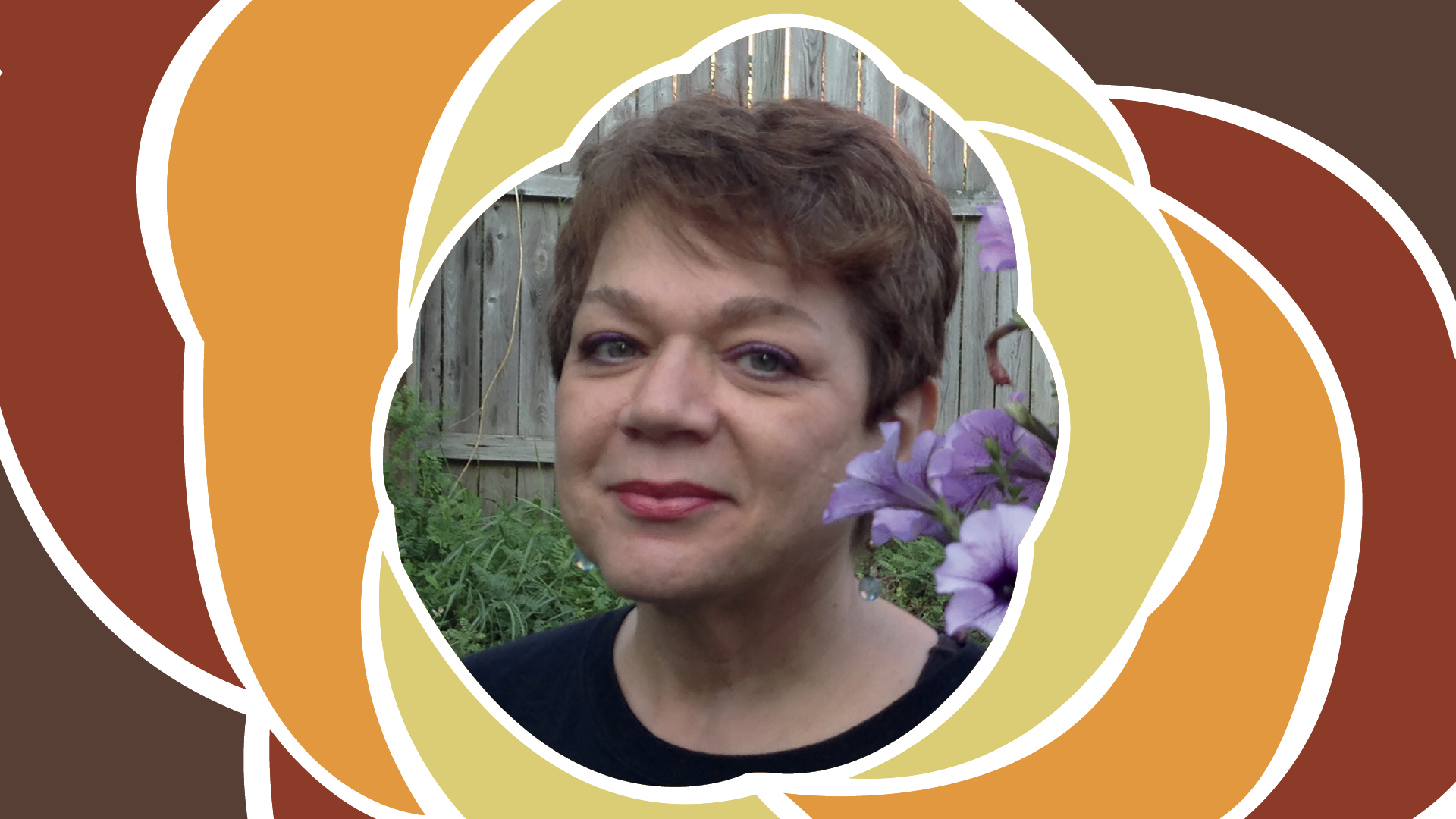
Lisa López Levers, LPCC-S, LPC, CRC, officially retired four years ago, but you wouldn’t know it from looking at her schedule. The busy professor emerita, who spent 21 years teaching full time at Pennsylvania-based Duquesne University, is preparing to visit South Africa on the university’s behalf in hopes of creating a relationship with a science hub working on culturally aware sustainability. She’s also co-teaching two online courses, carrying out research as a scholar-in-residence at the university’s Center for Global Health Ethics, counseling clients virtually, planning to update editions of her textbooks, and thinking about writing a book called, ironically, Embracing the Nothingness. When she has free time, Levers practices tai chi — which she learned over 20 years from a Chinese Shaolin master, along with kung fu — to stay fit.
“I jokingly tell my friends, ‘I want to go back to full-time work. I’m so much busier now in retirement than I used to be,’” Levers says with a laugh. “But, in all seriousness, I love everything I’m doing and the freedom I have now.”
Levers’ refusal to slow down during retirement likely isn’t surprising to those who know her. Throughout her career — 32 years in teaching and 15 years in community mental health — she has pursued her passion for helping trauma survivors with relentless energy.
In 1980, she pushed to create and teach one of the first graduate-level courses dedicated to trauma counseling. In 2012, she was the first to write a comprehensive textbook about it for mental health practitioners, called Trauma Counseling: Theories and Interventions for Managing Stress, Crisis, Trauma, and Disaster. She followed it up with Clinical Mental Health Counseling: Practicing in Integrated Systems of Care in 2019. Both are among the foremost textbooks on the subject.
She is also a pioneer when it comes to international work with communities experiencing the effects of poverty, war and other forms of trauma. She’s traveled to eight African countries and to Russia to develop culturally sensitive interventions and programs.
She’s also worked with Native American tribes and virtually trained counselors in Saudi Arabia. Her global expertise led to her selection as president of the International Association for Resilience and Trauma Counseling, an ACA division, from 2023 to 2024; endowed chair in African studies at Duquesne from 2012 to 2017; and a Fulbright scholar at the University of Botswana from 2003 to 2004.
“I learned early on in my career that you have to pay attention to people’s context and cultural backgrounds, whether we’re talking about urban culture or someplace halfway across the world,” Levers says. “Showing respect, reflecting on what they’re saying, responding authentically and showing compassion for their suffering are so important to me.”
Being the ‘Other’
Levers was born in Massillon, Ohio, to a Hispanic mother and a Caucasian father. Her father was a steelworker, and her mother a credit manager. Before first grade, her family moved to a different part of town so she could attend a highly rated Catholic school.
“I had older boys chasing me home from school and telling me that my mother and I should go back to where we came from. They called me derogatory terms for being Hispanic,” she says. Her early experience with racism had a lasting impact. “It set me up for the awareness that I have today of what it means to be the ‘other.’”
After high school, she enrolled at Kent State University in Ohio to study art, English literature and art history. She says she had no intention of entering the counseling field, but that changed during her undergraduate program when she started reading, and appreciating, Carl Jung’s work. Another influence was seeing a campus aide helping a person in a wheelchair around the university. “I was really touched by that aspect of helping another person make the most of their life,” she says.
After completing her undergraduate degree, she registered for Kent State’s rehabilitation counseling master’s program, with a focus on psychiatric disability. She loved that counseling focused on the individual and tried to help them feel better about themselves regardless of obstacles, diagnoses and baggage.
Discovering the Role of Trauma
After graduating in 1975, Levers went backpacking across Europe for six months. Once she returned, she was hired to be the first counselor for a maximum security women’s ward at a large state psychiatric institution. Her patients had severe psychiatric disorders, such as schizophrenia, and many had been hospitalized for a long time.
Finding the environment harsh, she left after six months to work for a new community mental health center at its satellite location in Akron, Ohio, which served a predominantly African American community. After 10 years there, she worked in several management positions elsewhere to help an Amish community tackle mental health issues, develop programs for people with developmental disabilities and lead a women’s substance abuse recovery program.
Throughout her time in community mental health, Levers says it became apparent that a common factor drove her patients to seek help: trauma. “I heard some of the most horrific incidents of children being tortured in their own homes; I heard stories from returning Vietnam War veterans; I heard it all,” she says. “I recognized serious trauma, but I didn’t know what to do with it, except listen to my clients.”
Trauma hadn’t been mentioned during her master’s program, and there was no training and little literature available on the subject. Post-traumatic stress disorder (PTSD) wasn’t added to the Diagnostic and Statistical Manual of Mental Disorders™ until 1980.
Instead, when Levers wanted to learn more, she sought out the knowledge. She remembers going to the library after meeting her first patient with dissociative identity disorder five years into her first community center job. There wasn’t much information available, except that those diagnosed had usually experienced serious trauma.
Determined to help her client, she reached out to the chief psychiatrist at Akron’s general hospital for guidance. He invited her to a monthly study group for therapists treating dissociative identity disorder. From those sessions, she was able to access further resources and learn more about the disorder. “It was amazing. It was from that point forward that I realized they just don’t teach students enough about trauma in the helping professions,” she says.
Switching to Teaching
Levers enrolled at Kent State University again in 1980, this time to do her PhD in counselor education and human development. While working on her dissertation, she discovered a newfound passion for research-based academic writing. She also believed she had valuable knowledge to share with students, so she decided to become an educator.
In her first assistant professor role at Ohio University, Levers asked the program director if she could offer a course on trauma counseling, which hadn’t been done before. Facing pushback, she argued her case and was eventually allowed to teach an experimental course during the summer.
“The director said to me, ‘I want you to understand that not enough students are going to sign up for this course, which means you’re not going to get summer pay,’” Levers says. But on registration day, she was told her course was full and was asked whether she would go over the cap.
When she later made the case to teach the course at three other universities, it again proved popular. However, there was no textbook that covered all her class content, so she would compile photocopied pages into a large packet and assign additional readings. “At some point, I thought, somebody’s got to write a book on trauma. And if no one else will do it, I will,” she says.
Taking Her Expertise Global
As was the case with many of Levers’ significant life choices, traveling to other parts of the world to help communities with trauma wasn’t planned. When international students from Africa asked her how they could apply their Western-oriented counseling degrees back home, she started internationalizing her course content. The academic community took notice, and in 1993, she was asked by an institute director at Ohio University if she wanted to go on a six-week paid visit to Lesotho, in the southern region of Africa, to share her knowledge.
She jumped on the opportunity. She was blown away to learn about the elevation — rather than the pathologization — of traditional healers who used Indigenous knowledge and sometimes trance states to impart wisdom. Curious to learn more, she applied for and received a federal grant to go back to Sub-Saharan Africa to do a qualitative study on traditional healers.
As her reputation as a culturally aware trauma counselor grew, she was invited to carry out more trainings and develop programs, centers, frameworks and services for various communities in African countries. Among them were Rwandans with PTSD from living through genocide and orphans in Botswana who had lost their parents to AIDS.
One meeting with a young orphan left a lasting impression on Levers. After watching her parents and grandparents die from AIDS, the girl had been beaten and treated like a servant by adult siblings. As a result, she stopped talking, so Levers communicated with her by pen and paper. One day, the girl sat on Levers’ lap and let out silent screams. “It broke my heart. It killed me to say goodbye to that little girl. I wanted to adopt her, but it wasn’t possible,” she says.
The experience motivated her to do more for AIDS orphans in Botswana, so she applied for a year-long Fulbright scholarship at the University of Botswana. She dedicated her project to creating services for the orphans.
While there, Levers met, and later became engaged to, a local photojournalist. A few years into their relationship, she met his six-year-old daughter, Sheebah, whom she unofficially adopted. “She was incredibly smart, and I adored her from the moment I set eyes on her. I wanted to make sure she received a good education at an English medium school, so I arranged for that,” Levers says.
She also made an impact on children’s lives in Russia, where she helped institutionalized orphans reintegrate into society by setting up community-based services. Closer to home, she consulted with tribes from the Wind River Indian Reservation and immersed herself in Indigenous traditions — including meeting with medicine men and participating in a sweat lodge — to create a culturally sensitive care system for children facing severe emotional disorders.
When she reflects on the impact she’s been able to have, particularly in Africa, she feels grateful. “I am the human being that I am today because of the Mother Continent,” she says. “I really appreciate the fellow who invited me to Lesotho. That was one of the most remarkable gifts in my life.”
Passing the Torch
Levers wants young counselors starting out to know anything is possible. “What I’ve learned is that you have to do your research and be able to make an intelligent, informed argument,” she says. That — along with being stubborn — is how she was able to break down barriers and open doors in her career, she says.
While Levers’ fiancé passed away in 2018, she and Sheebah stay in touch by video call every week and see each other once a year in Botswana. “She is absolutely the light of my life,” Levers says.
It’s Sheebah, and other young people like her, who motivate Levers to do more in the climate change space and to continue her counseling work, she says. “I want to keep promoting healing from trauma, but also working on helping people develop resilience. How remarkable would it be to pass on transgenerational resilience and wellness instead of transgenerational trauma?”


2461 Eisenhower Avenue, Suite 300, Alexandria, Va. 22314 | 800-347-6647 | (fax) 800-473-2329
My ACA Join Now Contact Us Privacy Policy Terms of Use © All Rights Reserved.