
A Framework for Better Friendship Literacy
Adult friendship is having a public reckoning. The Surgeon General has called loneliness a national epidemic, and the data three years later shows little improvement. Yet clinicians have almost no clinical framework for it, leaving them with little more to offer their friend frustrated clients than a “shrug” and advice to join a club.
Join us for a live on Nov. 17, from 12-1:30 p.m. ET as Stephanie Cox introduces a framework for better friendship literacy, based off recent research, the principles behind a Secure Base of Friendship, along with the Seven-Step Secure Friendship Arc, an attachment-based intervention adapted from Emotionally Focused Individual and Couples Therapy specifically for platonic rupture, designed by Stephanie Cox. This session will walk participants through its full application with a case vignette.
Learning Objectives
- Learners will identify how attachment theory extends beyond romantic relationships to platonic bonds, and the core components of a Secure Base of Friendship. Learners will apply the Seven-Step Secure Friendship Arc to a client experiencing friendship friction who is on the precipice of a failed friendship but has the option to save it.
- Learners will differentiate between healthy relational maintenance behaviors and protective behaviors that lead to friendship conflict and loss. Learners will apply a structured questionnaire on “productive conflict” vs “Harmful tension” to a case vignette involving a client deciding how to address a friend they have friction with.
- Learners will identify how friendship expression and expectations vary across culture, neurotype, and other individual differences. Learners will apply this cultural sensitivity when assessing a client's friendship patterns and tailoring use of the Secure Friendship Arc.
- Learners will recognize friendship grief as a legitimate clinical presentation requiring dedicated intervention. Learners will apply a grief-processing framework adapted from the Dual Process Model of Grief to a case vignette involving a client navigating the end of a significant friendship.
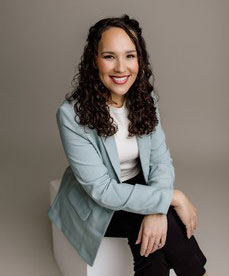
Presenter
Stephanie Cox, MS, LMHC is a Qualified Supervisor in the State of Florida, Certified Emotionally Focused Couples Therapist, Certified EFT Supervisor and private practice owner. She works exclusively with couples in her practice using the attachment-based EFCT model.
Stephanie is the author of the forthcoming book, Friendless: Why Adult Friendships Keep Failing, published by the American Counseling Association and slated for a Spring 2027 release date.
In her book, she uses the latest research on adult friendship to provide clinicians a comprehensive framework with which to view adult friendship struggles that are present in clients in session.
Stephanie believes that attachment issues are not relegated to romance alone, and the therapy field, and the therapists in it, need more robust ways to intervene in the world of friendship friction that our clients bring in session. Her hope is to contribute to the growing clinical field of better adult friendship awareness, research, and practical application in therapeutic work so that our clients can engage in stronger, more secure platonic bonds, and experience less friendship failures and community isolation.
More Information
Cost
- ACA members – $22.50
- Nonmembers – $45
Continuing Education (CE) Credit
Participants can earn 1.5 credit hours.
Not an ACA member? Join or renew today to save on this webinar and so much more!

2461 Eisenhower Avenue, Suite 300, Alexandria, Va. 22314 | 800-347-6647 | (fax) 800-473-2329
My ACA Join Now Contact Us Privacy Policy Terms of Use © All Rights Reserved.